A Market That Moved 67% in One Year — and Why
Gujarat exported 83,452 tonnes of dehydrated white onions in 2023-24 — a 67% year-on-year increase and the highest volume in four years. For buyers, this number tells two stories simultaneously: it signals the scale and reliability of Indian dehydrated onion supply, and it reflects a price spike driven by simultaneous crop failures in China and Egypt in the preceding season that pushed global buyers to India as the alternative of last resort.
India's Mahuva cluster in Gujarat is the global centre of gravity for dehydrated onion and garlic processing. The region hosts over 120 dehydration plants, producing approximately 80,000 tonnes of dehydrated onion and 40,000 tonnes of garlic powder annually — with around 90% exported. For international food manufacturers who use dehydrated alliums as a year-round ingredient, Mahuva is not an alternative source; it is typically the primary one.
Understanding what moves price in this category — and when to buy — is more commercially useful than any static price list. This guide covers product forms, quality specifications, what drives the market, and what to watch for when evaluating Indian suppliers.
Product Forms and What They Are Used For
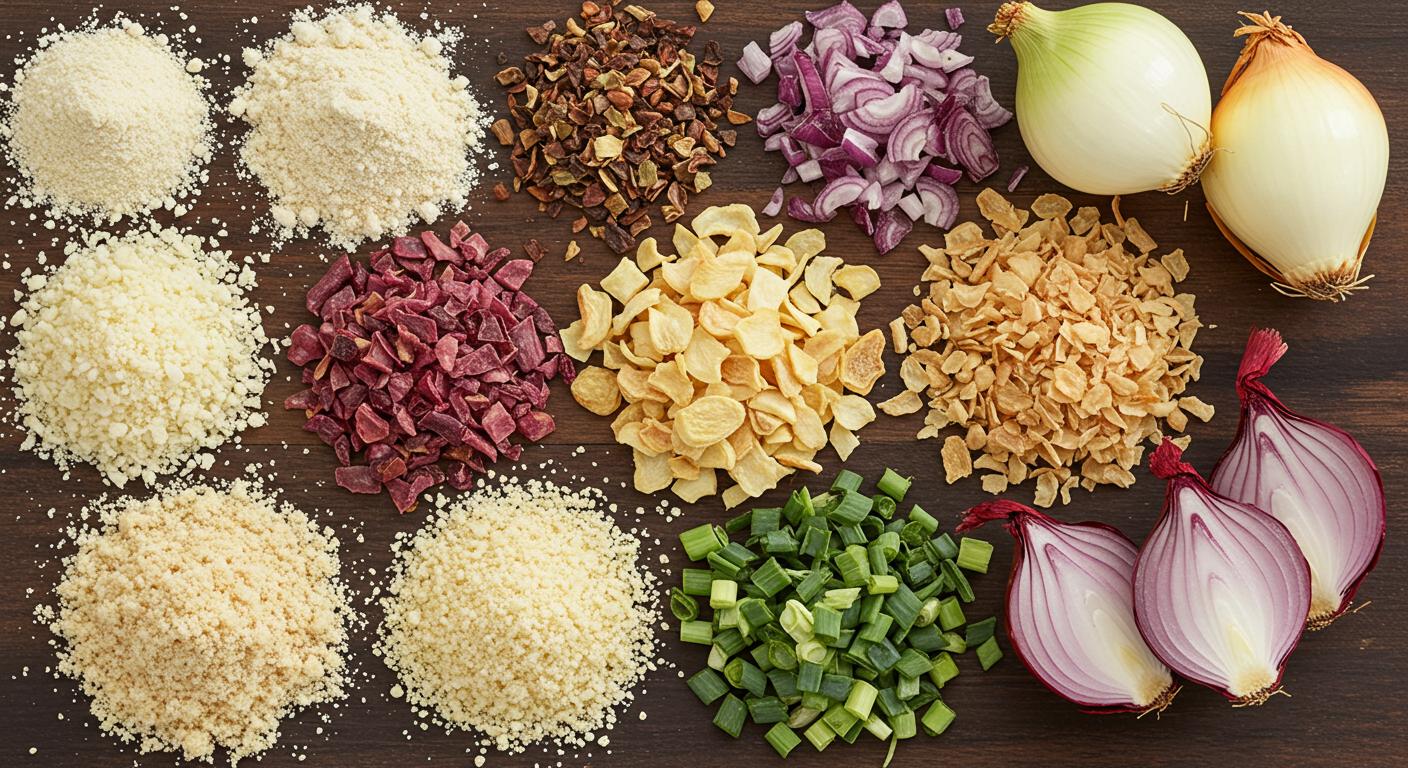
Both onion and garlic are available in a range of forms from the same Gujarat processors. The form selection is entirely application-driven — a soup seasoning manufacturer needs a different spec than a pizza topping ingredient supplier.
Dehydrated Onion
| Form | Application | Moisture |
|---|---|---|
| White flakes (~5mm) | Ready meals, soups, snack seasoning | ≤5% |
| Minced (3-5mm) | Sauces, condiments, meat products | ≤5% |
| Granules (1-3mm) | Spice blends, instant noodle seasoning | ≤5% |
| Powder (80-mesh) | Dry mixes, flavour coatings, seasoning blends | ≤5% |
| Kibbled (8-12mm) | Retail herb mixes, visible-ingredient products | ≤5% |
| Toasted / fried | Burger toppings, retail garnish, biriyani packs | ≤4% |
Dehydrated Garlic
| Form | Application | Moisture |
|---|---|---|
| Flakes (~3mm) | Pasta sauces, marinades, pizza toppings | ≤5% |
| Minced (2-4mm) | Sauces, dressings, meat marinades | ≤5% |
| Granules (0.5-1.5mm) | Garlic bread, seasonings, spice blends | ≤5% |
| Powder (80-100 mesh) | Flavour coatings, dry rubs, snack seasoning | ≤5% |
| Roasted garlic powder | Premium culinary, restaurant supply | ≤4% |
| Garlic salt blend | Table salt blends, retail seasoning shakers | ≤3% |
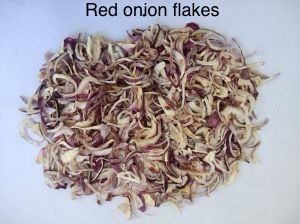
Red onion flakes — light to dark purplish-red, moisture ≤6-7%, produced in Mahuva, Gujarat.
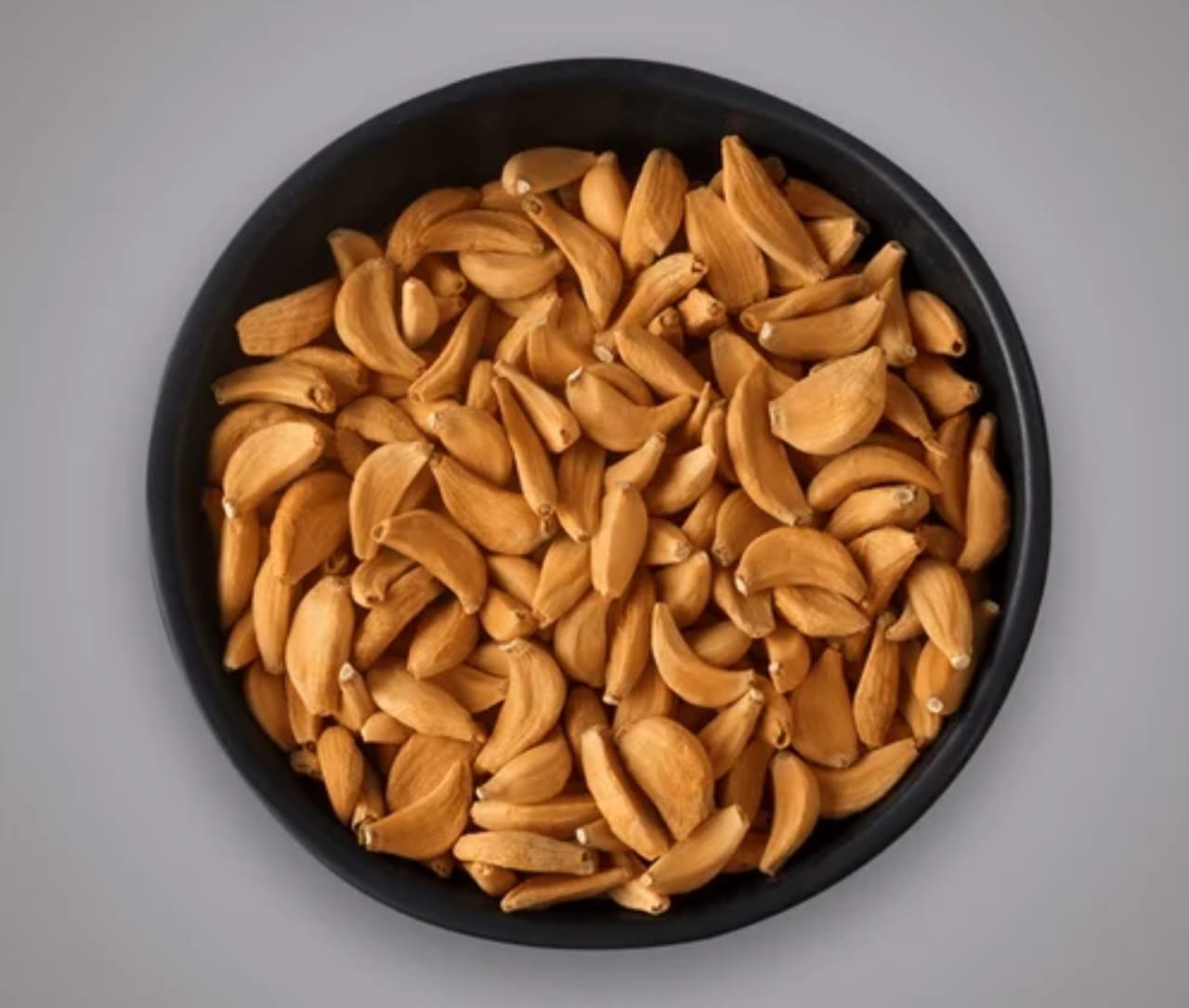
Dehydrated garlic flakes — creamy white to light brownish, 8-15mm, purity 99%.
Quality Specifications: What to Specify in Your Purchase Order
Dehydrated onion and garlic specifications are relatively standardised across the Mahuva cluster, but there are several parameters where buyer specification matters and where under-specified purchase orders create disputes at arrival.
| Parameter | Standard | Tighter spec | Notes |
|---|---|---|---|
| Moisture | ≤5% | ≤4% on request | US/EU food manufacturers often require ≤4% for shelf-stable products |
| Purity | ≥98% | ≥99% achievable | Free from foreign matter, stems, skins, burnt particles |
| Colour | White to off-white (onion); light cream (garlic) | Colour chart reference on request | Yellowing indicates sulphite deficiency or age; browning indicates excess heat |
| Sulphite (SO₂) | ≤50 ppm (EU MRL) | Sulphite-free available | 10-15% price premium for sulphite-free; requires 14-21 days advance notice |
| Pesticide residues | EU MRL compliant | US EPA MRL or Japan MRL on request | Multi-residue panel from NABL lab per shipment |
| Ethylene oxide | Not applied | EU BfR limit <0.02 mg/kg | EU rejections historically linked to ETO; confirm processor does not apply ETO treatments |
On Sulphite-Free Production
What Drives Dehydrated Onion and Garlic Prices
The 2022-23 season illustrates how dehydrated allium prices move. When China (a major garlic and onion processor) and Egypt (a significant onion exporter) both experienced poor crop seasons simultaneously, global buyers turned to India. Gujarat's 67% year-on-year export volume increase to 83,452 MT in 2023-24 (APEDA) is partly a reflection of this demand surge. Indian processor inventories were drawn down, prices moved materially upward, and buyers who had not secured forward supply found themselves on wait lists during peak demand.
The lesson is that dehydrated allium prices are not purely driven by India's domestic supply situation — they are influenced by global supply from competing producing countries. Understanding that frame helps buyers interpret price movements.
Indian fresh onion harvest (Oct-Dec)
Dehydrated onion supply tracks the fresh onion crop. A good Oct-Dec harvest in Maharashtra, Rajasthan, and Gujarat means abundant raw material for processors and moderate prices. A poor harvest — drought, unseasonal rain — compresses raw material availability and lifts processor costs.
Competing crop failures (China, Egypt)
India is not the only major producer. China dehydrates large volumes of onion and garlic for export. Egypt produces significant fresh onion quantities. When either has a poor year, global buyers shift sourcing to India, increasing demand and drawing down Indian processor inventories. This happened in 2022-23 and can happen again.
INR/USD exchange rate
Indian processors cost in INR; revenues are predominantly in USD. A weaker INR increases their USD-denominated margin and gives them room to compete on price. A stronger INR compresses their margin and firms up USD prices.
Sulphite-free premium
Sulphite-free production commands a persistent cost premium over standard sulphited dehydrated onion. This reflects the additional production complexity — colour management without SO₂ requires more careful process control, separate production runs, and lower effective yields.
Moisture specification
Tighter moisture (≤4% vs standard ≤5%) requires additional drying time and equipment energy. Buyers who need guaranteed ≤4% moisture (common for humid-climate markets or for long-transit routes) should expect this to be reflected in price.
Why Mahuva Is the Sourcing Reference Point
Mahuva in Gujarat's Bhavnagar district is not merely one option among many — it is structurally the centre of Indian dehydrated onion and garlic production. The cluster developed because Mahuva sits adjacent to Gujarat's major onion-growing belt, which means the supply chain from farm to dehydration plant is short, the raw material is fresh, and the processing infrastructure is dense. Over 120 plants operating in close proximity means competitive pricing, a wide range of forms and specifications, and experienced export documentation handling.
Most Mahuva processors have direct experience exporting to EU, US, Japan, and GCC markets. The documentation requirements — NABL COA, phytosanitary certificate, pesticide multi-residue panels — are well understood. The logistics infrastructure to Mundra and JNPT ports is established.
FAQ: Dehydrated Onion and Garlic Buyer Questions
QWhat is the shelf life?
Properly sealed in moisture-barrier packaging and stored below 25°C at below 60% relative humidity: dehydrated onion lasts 18-24 months from production date, dehydrated garlic 12-18 months. The lower the moisture of the product (≤4% vs ≤5%), the longer the effective shelf life under equivalent storage conditions.
QWhat is the difference between white flakes and kibbled onion?
White flakes are sliced onion, approximately 5mm — rehydrate well and are the most widely used form for soups, ready meals, and seasonings. Kibbled onion is a coarser cut at 8-12mm, used where a visible onion piece in the finished product is desired — retail herb mixes, artisan-style products, or pizza toppings.
QDoes EU import still have restrictions on Indian dehydrated onion?
There are no permanent import restrictions on Indian dehydrated onion. The RASFF (EU food and feed safety alert system) has historically flagged Indian products for pesticide residues and, in some periods, ethylene oxide. Ensuring your supplier provides a full EU MRL-compliant multi-residue pesticide COA and explicitly confirms no ETO treatment is the appropriate due diligence response.
QCan you supply non-irradiated product?
Irradiation is not standard practice in the Mahuva processing cluster. We can confirm non-irradiated status for lots on request, with written confirmation from the processing unit included in the documentation set. Specify this requirement in your purchase order.
QWhat lead time should I plan for?
Standard forms (white flakes, minced, powder, granules) from current stock: 7-14 days for documentation preparation and container dispatch. Sulphite-free lots or custom forms require 21-30 days from order confirmation. Always confirm current stock position before building a tight delivery schedule.