The Market Opportunity — and Where First-Time Buyers Get Stuck
Makhana exports from India have grown at a 39% CAGR over the past four years — from 6,700 MT in 2020 to 25,130 MT in 2024, according to APEDA export data. India produces over 90% of the world's supply, almost entirely from Bihar. The Indian government formalised the sector's strategic importance in Union Budget 2025 by establishing a dedicated Makhana Board with ₹100 crore in funding. For international buyers in the USA, UK, UAE, Canada, and Australia, the product is no longer obscure — demand is real and growing.
What catches buyers off guard is not the product itself but the paperwork. Documentation errors are the most common cause of customs holds and port rejections for Indian food exports. A phytosanitary certificate issued before the final lot is packed is invalid. A COA from a non-NABL lab will be rejected by US FDA and EU customs. Mismatches between the commercial invoice and packing list trigger mandatory inspections. None of this is complicated once you know what to expect — but the first-time buyer who skips over the documentation section of this guide is the one who pays demurrage.
This guide covers the full import process: the correct HS codes effective July 2025, what certifications your exporter must hold, what your document set must include, what to watch for when evaluating suppliers, and the questions real buyers ask about risk.
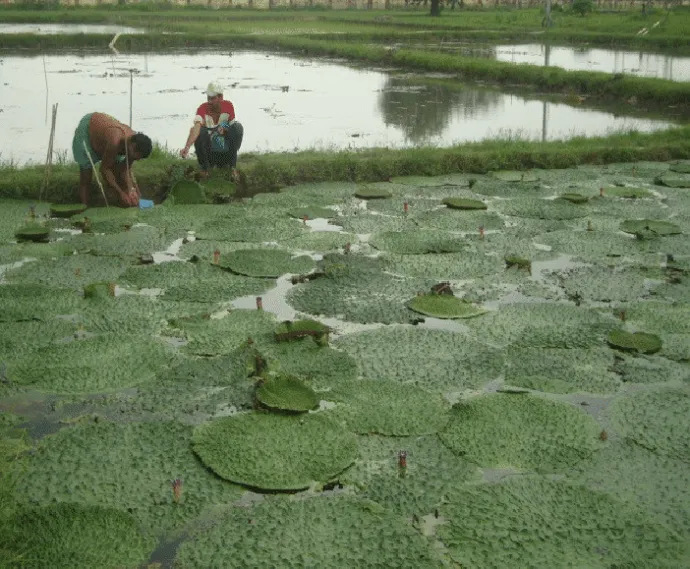
Makhana is cultivated in the wetland ponds of Bihar — India produces over 90% of global supply from this one state.
HS Code & Classification
As of July 2025, the Indian government issued updated HS codes for makhana products. Using the pre-July classification can cause a mismatch at customs — something that will hold your shipment and require amended documentation.
| Product | HS Code | Notes |
|---|---|---|
| Popped makhana (phool makhana) | 2008.19.21 | Effective July 2025; covers plain, roasted, salted |
| Makhana flour / powder | 2008.19.22 | Effective July 2025; milled forms |
| Raw / unpopped makhana seeds | Confirm with broker | Different classification; confirm before shipping |
Why This Matters
Flavoured makhana — peri peri, Himalayan salt, turmeric — falls under 2008.19.21 as long as it is makhana that has been seasoned after popping. Heavily processed variants (e.g., makhana coated in chocolate or combined with other ingredients into a snack bar) may require a different classification. When in doubt, get a binding tariff ruling from your customs authority before placing a large order.
Certifications: What Your Exporter Must Hold
Indian exporters are required to hold active registrations under several bodies. These are not optional — a shipment from an exporter without FSSAI registration cannot legally be exported from India. Before you place an order, verify these documents exist and are current.
FSSAI Licence
Food safety registration mandatory for Indian food exporters
Verify the FSSAI number independently at fssai.gov.in
APEDA RCMC
Agricultural & Processed Food Products Export Development Authority registration
Required for all agricultural product exports from India
IEC (Import Export Code)
Customs registration issued by DGFT
Without a valid IEC, no export shipment can be filed
GST Registration
Mandatory for legal commercial operations in India
Confirm the GSTIN matches the company name on commercial invoice
Per-shipment certificates — the Phytosanitary Certificate and the Certificate of Analysis — are not registrations held by the exporter but are generated fresh for each consignment. The Phytosanitary Certificate is issued by the National Plant Protection Organisation (NPPO) India after the lot is inspected. The COA is issued by a NABL-accredited laboratory. Both must reference the specific lot number and packing date of your shipment.
Optional certifications — organic (USDA NOP or EU Organic), GI Tag for Mithila Makhana, Halal, Kosher — are available for specific lots from certified processors. These require advance specification at the enquiry stage, as they affect which processing facility and supply chain the product must move through. You cannot retroactively certify a shipment organic.
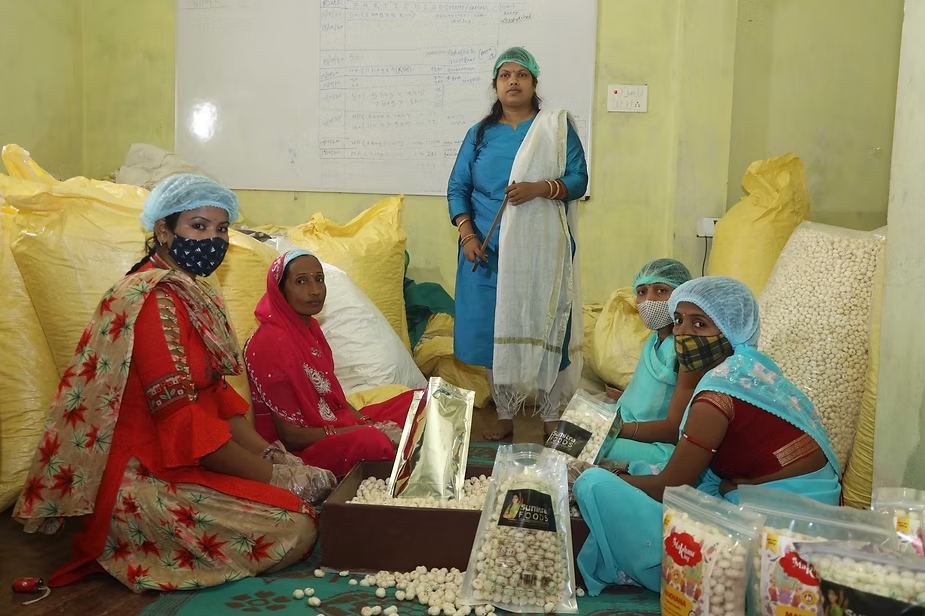
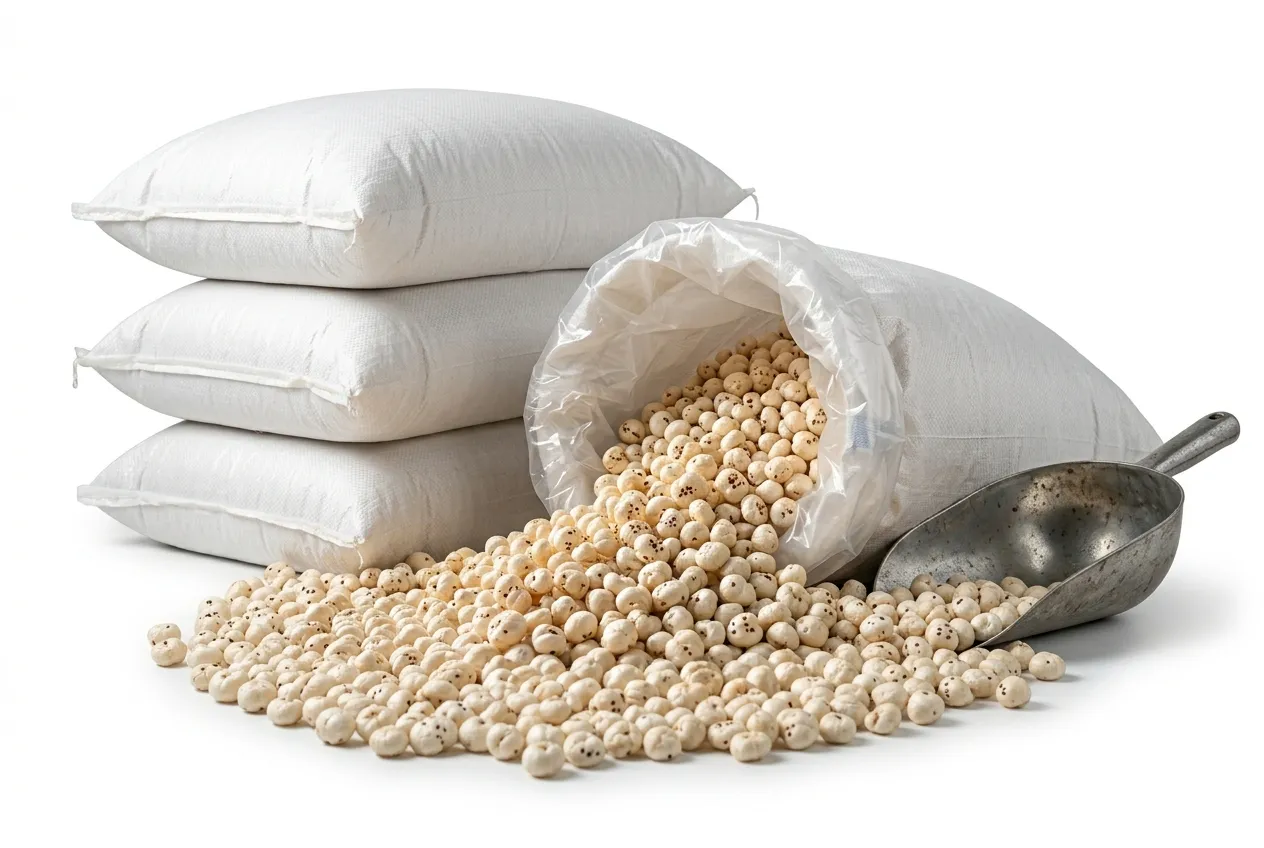
Export-grade makhana being packed at a Bihar processing facility. Each bag is labelled with lot number, grade, weight, and packing date.
The Full Document Set
The document set for a makhana export shipment is not long, but every item must be correct, consistent with the others, and issued at the right time. A single inconsistency — lot number missing from the COA, a weight that differs by 2 kg between the invoice and packing list — is enough to trigger a customs query and delay clearance.
| Document | Issued By | Timing | Common Errors |
|---|---|---|---|
| Commercial Invoice | Exporter | Before container stuffing | HS code wrong; price does not match Proforma Invoice |
| Packing List | Exporter | Before container stuffing | Net/gross weight mismatch with invoice; lot numbers missing |
| Bill of Lading / Airway Bill | Carrier | After vessel departure | Notify party wrong for LC terms; Telex vs Original release confusion |
| Certificate of Origin | FIEO or Chamber of Commerce | Before shipment | State of origin not specified (matters for GI products) |
| Phytosanitary Certificate | NPPO India | After final packing — not before | Issued before lot is finalised; dated before packing date |
| Certificate of Analysis (COA) | NABL-accredited lab | Before shipment | Non-NABL lab used; lot number not referenced |
| Insurance Certificate | Indian insurer | Before vessel departure | Coverage amount less than CIF invoice value; omitted on TT-term shipments |
Red Flags: What to Watch For
The makhana market has grown fast enough that there are now many suppliers who have not caught up with export documentation standards. The following patterns should prompt closer scrutiny before you commit funds.
- Exporter cannot provide FSSAI and IEC numbers upfront — any legitimate exporter has these on letterhead
- COA is from a lab not accredited by NABL — check the lab name at nabl.gov.in before accepting
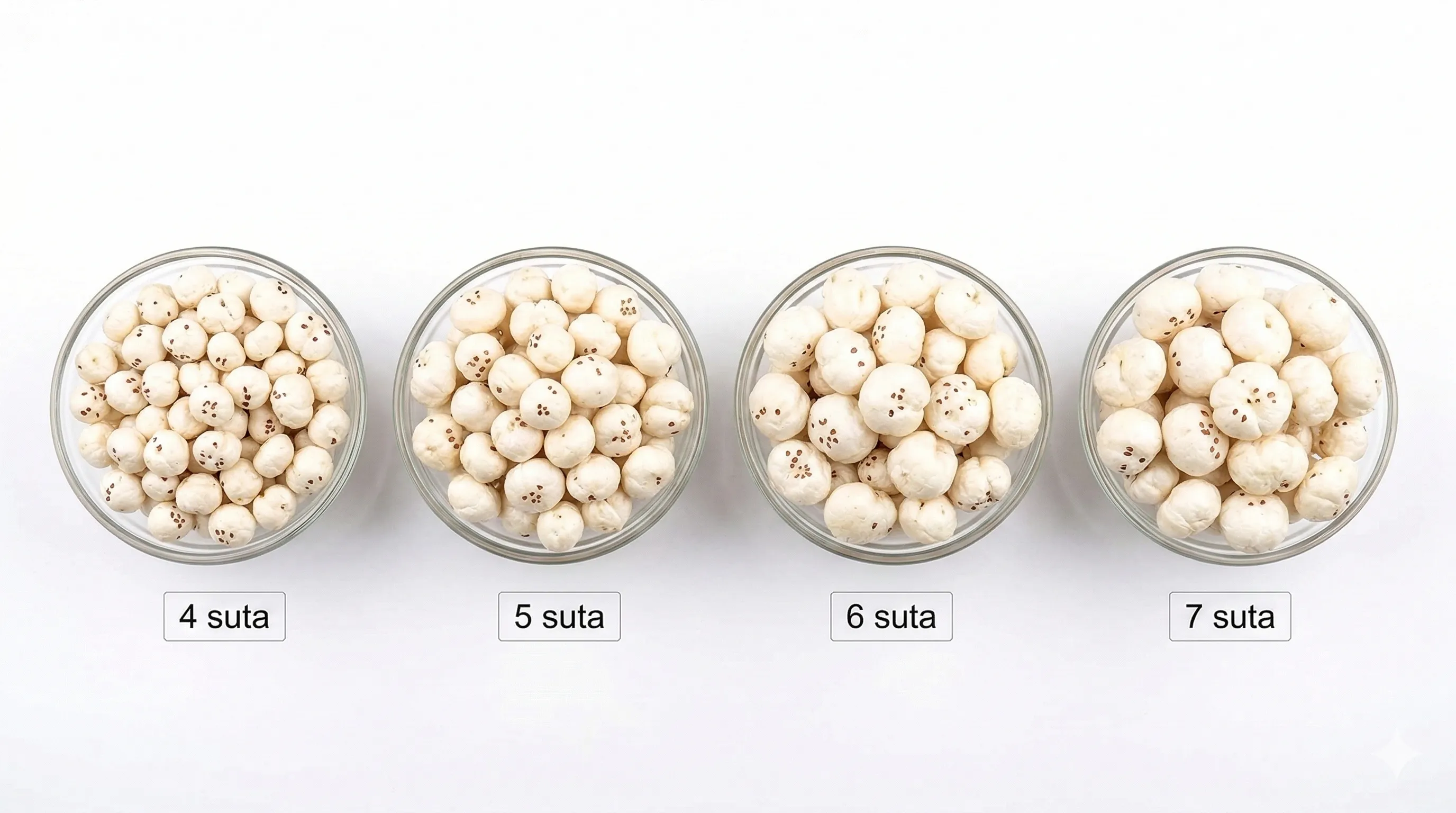
- Quote is significantly below the market range — almost always reflects lower Suta grade, higher moisture, or absent documentation
- Phytosanitary certificate is offered before your production run is confirmed — this is procedurally impossible if done correctly
- No pre-shipment sample offered or physical inspection resisted — legitimate exporters welcome verification
- Payment demanded 100% in advance to a personal bank account, not a company account — a standard red flag for fraud
- Supplier has no verifiable company presence (no GST registration traceable online, no India company registry listing)
- 7 Suta grade is quoted freely during Jun–Sep — peak scarcity period; large 7 Suta availability at this time should raise questions about grade accuracy
Best Practice
FAQ: What Buyers Actually Ask
QHow do I know I am not getting scammed by a fake supplier?
Verify the supplier's IEC number at the DGFT website (dgft.gov.in), their FSSAI licence at fssai.gov.in, and their GST number at the GST portal. A legitimate exporter will have all three verifiable online. Ask for a video call walkthrough of their facility. Request that any advance payment go to a company bank account matching their business registration name.
QWhat are the most common reasons makhana gets held at customs?
Pesticide residue levels above the destination market's MRL, documentation mismatches (quantity or HS code), missing or incorrectly dated phytosanitary certificate, and aflatoxin levels above permitted limits. A multi-residue pesticide panel and aflatoxin test from a NABL lab before shipment is the primary defence.
QWhat is the best time of year to order to get the freshest stock?
Makhana is harvested October-November in Bihar. Post-harvest stock from November through February is freshest, most stable in quality, and the most actively traded. By June-July, pre-harvest period, supply tightens and older stock from the previous season dominates. If freshness and consistency matter to your application, plan your orders for the Nov-Feb window.
QCan I visit the processing facility before placing a commercial order?
Yes, and we encourage it for buyers placing orders above 5 MT. We coordinate facility visits to Bihar processors and provide advance introductions to the processing unit management. Visits are typically arranged during October-February when production is active.
QHow does the India Makhana Board affect buyers?
The Makhana Board established in India's 2025 Budget is a long-term positive for supply reliability and quality standardisation. Its ₹100 crore allocation supports producer infrastructure, post-harvest technology, and export promotion. For buyers, this means improving traceability and quality documentation standards over the next 2-3 years.