What Moves Makhana Prices — and Why It Matters to Buyers
Domestic makhana prices in Bihar have risen significantly over the past five years. The driver is straightforward: India's own urban health food market has expanded rapidly, and domestic buyers now compete with international buyers for the same supply from the same Bihar-based processors. Export volumes have grown at a 39% CAGR from 2020 to 2024 (APEDA), yet supply from Bihar's wetland pond systems cannot expand at the same pace.
The right question when you receive a makhana quote is not “what is the price?” — Proforma Invoice prices are valid for days, not weeks. The more useful questions are: what factors are moving this price right now, where are we in the crop cycle, and does this quote reflect my actual grade and specification? This guide answers all three.
The Seven Factors That Move Makhana Prices
Makhana has no futures market. Prices are set bilaterally between buyers and processors, responding to the factors below. Understanding these factors lets you anticipate price direction rather than react to it.
1. Bihar monsoon performance
Approximately 85% of global makhana supply comes from one Indian state. If Bihar has a poor monsoon — reduced rainfall reducing pond levels — or flooding that drowns the ponds, harvest volume contracts. A 15-20% supply reduction in Bihar has no substitution option; there is no equivalent producing region. La Niña years bring colder, drier winters that reduce pond access and tighten the post-harvest supply window. When Bihar weather news is poor in August-September, prices begin moving before harvest.
2. Harvest timing (seasonal cycle)
Makhana is harvested October-November. Post-harvest (November through February) is the period of maximum stock, freshest product, and most stable prices. Pre-harvest (June-September) is the tightest supply period — processors are selling the previous year's remaining stock, which may have been in storage for 8-10 months. Prices are typically higher and quality consistency is harder to guarantee pre-harvest. If you can plan your procurement calendar, November-January is the optimal window.
3. Grade (Suta)
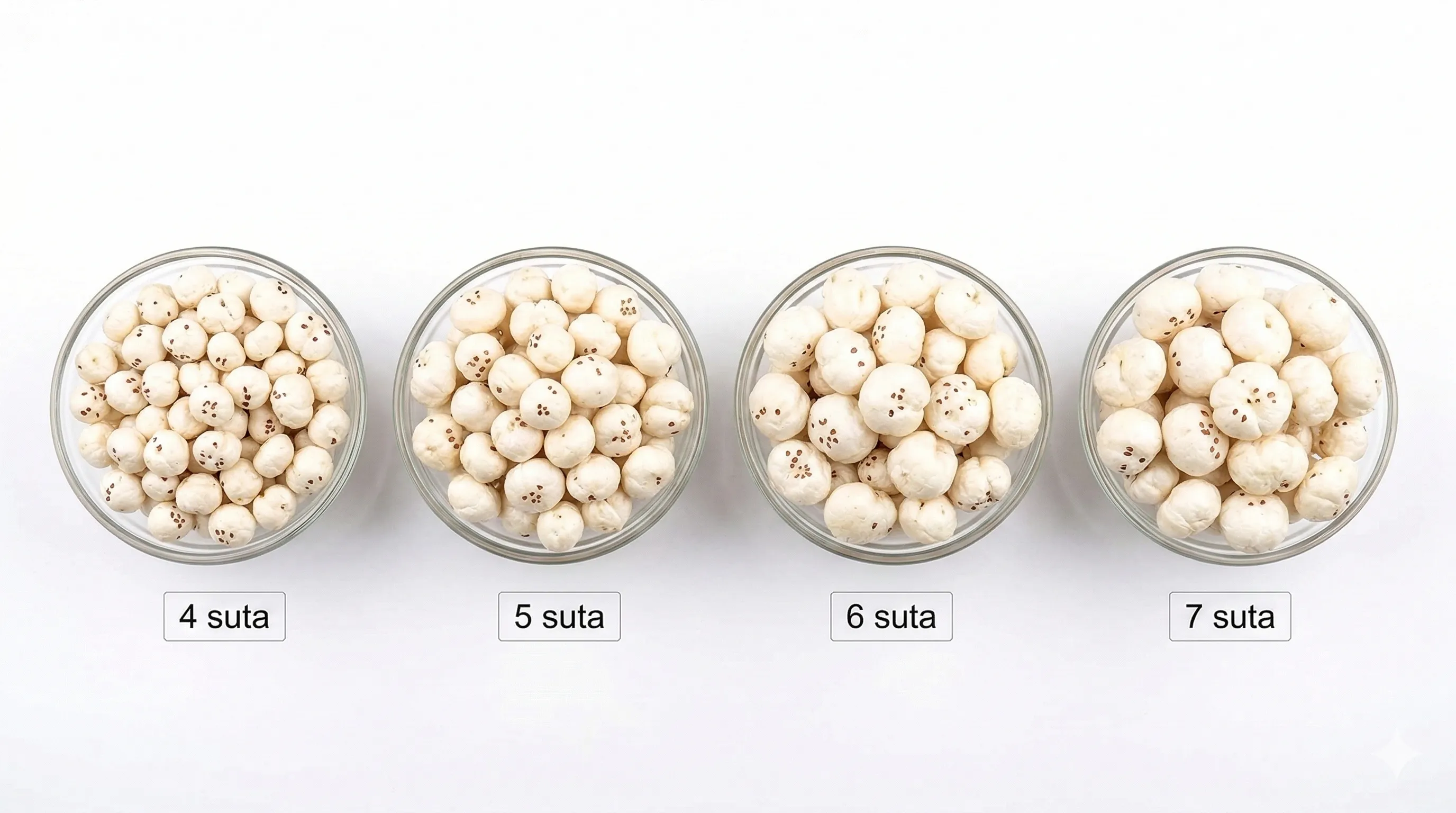
7 Suta beads come from larger lotus seeds, and the proportion of raw material yielding large beads is lower than for small beads. More raw material input per kg of output means a structural cost premium for large-grade makhana. This premium is real and persistent — it reflects input costs, not market speculation. It compresses slightly in exceptional harvest years when large seed proportions increase.
4. Moisture specification
Standard export moisture is ≤8%. For humid-climate destination markets (Southeast Asia, parts of the Middle East in summer), buyers often specify ≤6% moisture to provide shelf-life buffer. The extra drying step adds cost. Similarly, if your application demands very low moisture (e.g., makhana flour for a baked product), specify this upfront — it is not automatically included in a standard quote.
5. Packaging format
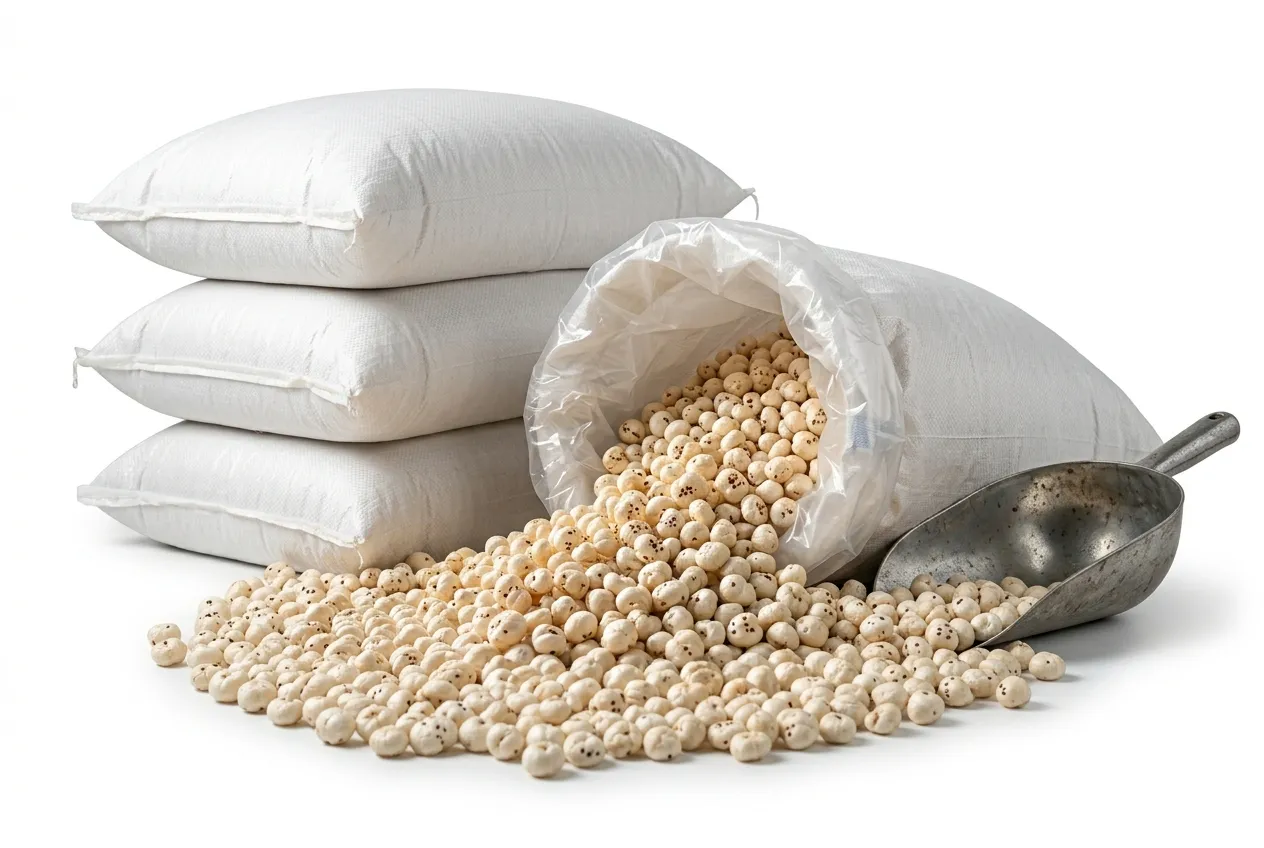
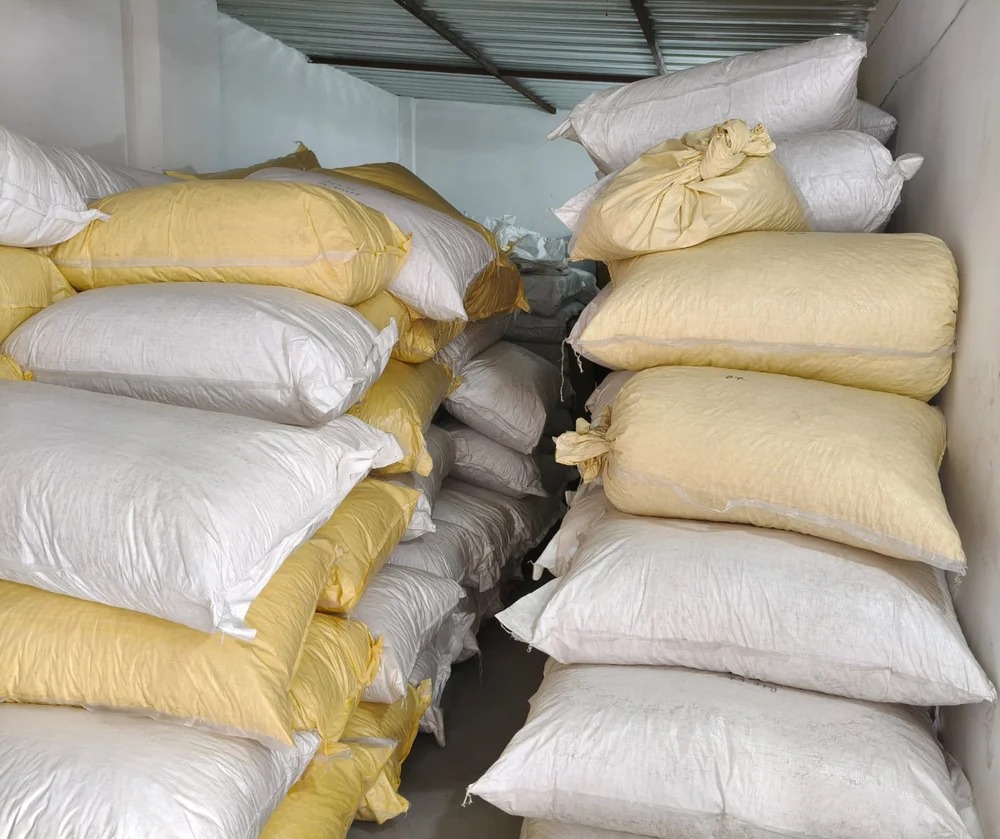
Bulk 25kg PP bags are the baseline export format and the reference point for all FOB price comparisons. Moving to retail pouches (100g–500g), custom branded packaging, or kraft paper inner bags adds packaging material cost, filling labour, and potentially private label MOQ premiums. Flavoured variants (roasted, seasoned) involve additional processing steps — roasting, seasoning, packing — and command a meaningful premium over plain bulk equivalents.
6. INR/USD exchange rate
Indian exporters price in USD but their cost base is in INR. When INR weakens against USD, Indian exporters have more flexibility on USD-quoted prices; when INR strengthens, their margin compresses and USD prices tend to firm up. For buyers on long-term procurement plans, tracking the INR/USD rate alongside Bihar harvest news gives a reasonable forward view on price direction.
7. Domestic Indian demand competition
This is the factor most international buyers underestimate. The Indian urban health food market has grown dramatically — makhana is now sold in premium supermarkets, quick commerce platforms, and health food chains across India. Domestic buyers compete for the same processor output as international buyers. When domestic demand is high, processors have less urgency to export and more pricing power. The establishment of the Makhana Board in Budget 2025 signals this category's strategic importance to India, which long-term supports supply development — but in the short term, domestic competition for supply is real.
The Crop Calendar: When to Buy
Buying at the right point in the makhana crop cycle is one of the few levers an international buyer can pull to manage price and quality risk simultaneously.
November–February (Post-Harvest Window)
- Freshest stock — current crop year harvest
- Maximum processor inventory means competitive pricing
- Most stable quality consistency across the season
- Best availability of premium grades (6 Suta and 7 Suta)
- Recommended window for annual procurement planning
June–September (Pre-Harvest Period)
- Previous crop year stock — up to 10 months old
- Tighter supply; processors selling down inventory
- Prices typically firmer, especially for premium grades
- 7 Suta availability most constrained during this period
- If buying, request lot production date on COA to assess storage age
Makhana Crop Calendar
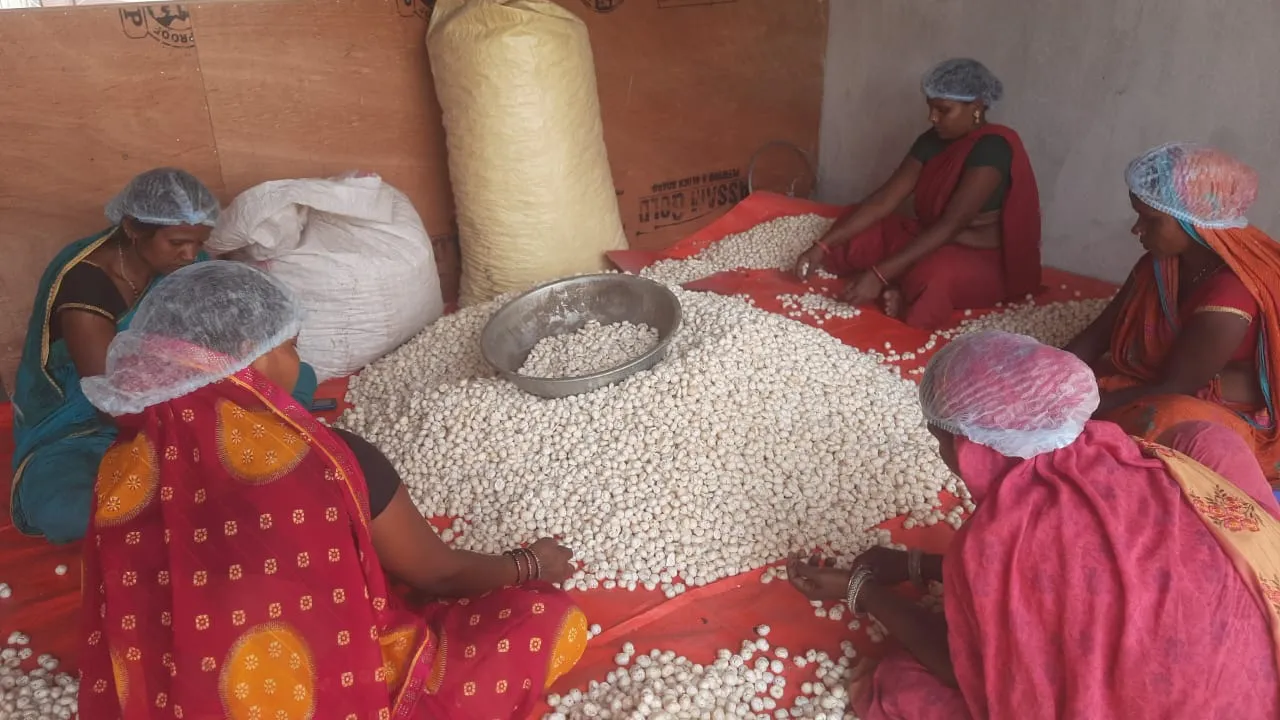
Post-harvest quality selection — the November to February window offers the freshest stock and most stable prices for international buyers.
How to Evaluate a Makhana Quote
A Proforma Invoice from an Indian makhana exporter should be a complete, specific document — not a vague price indication. When you receive a quote, check every one of these parameters before treating it as a serious offer.
- Grade specified explicitly (5/6/7 Suta) with diameter range — not just "premium grade" or "export quality"
- Moisture specification stated (≤8% standard; confirm if tighter)
- Purity stated (≥98% typical)
- Packaging format specified (bulk 25kg vs retail pouch vs custom)
- Incoterms clearly stated (FOB Indian port — which port? Or CIF to which destination port?)
- HS code on the invoice matches your customs broker's classification
- Validity period stated (7-14 days is standard; indefinite validity on a quote is a red flag)
- Payment terms specified (30% advance TT / 70% against BL copy is standard)
When comparing quotes from multiple suppliers, always normalise to the same Incoterm. FOB India is the standard benchmark — it removes freight and insurance variables that mask the actual product price. A CIF quote that looks cheaper than a FOB quote may just have a higher freight component baked in.
Red Flags in a Makhana Price Quote
- No grade or diameter specification — "premium export quality" means nothing without a Suta number and mm range
- Price significantly below the market range for that grade and season — almost always signals lower actual grade, higher moisture, or missing documentation
- Quotation valid indefinitely — legitimate exporters cannot hold prices open when farm prices move daily
- Price quoted per quintal or per bag without a per-kg breakdown — makes comparison impossible
- No moisture or purity spec stated — means you have no grounds for dispute if the shipment arrives out of specification
- CIF quote with freight destination not specified — makes the quote meaningless for comparison
- Large 7 Suta quoted freely in May-August at stable prices — cross-check against seasonal availability; 7 Suta is genuinely scarce pre-harvest
FAQ: Price Questions Buyers Ask
QWhy have makhana prices increased significantly in recent years?
Domestic Indian demand for makhana has grown sharply — it is now sold in premium supermarkets, quick commerce platforms, and health food chains across India. This creates direct competition between Indian domestic buyers and international buyers for the same Bihar processor supply. The Makhana Board established in Union Budget 2025 (with ₹100 crore allocation) confirms this is a commodity the Indian government considers strategically important. Export volumes have grown 39% CAGR from 2020–2024 per APEDA data, but supply expansion is constrained by the geography of Bihar's wetland pond systems. Plan your cost model around current price levels.
QHow long is a Proforma Invoice price valid?
A Proforma Invoice is typically valid for 7-14 days from issue date. Makhana prices move with crop news, currency shifts, and freight rate changes. An exporter who offers open-ended pricing is either unaware of their own cost structure or is not a serious commercial operator.
QCan I lock in a price for forward delivery?
We can issue a Proforma Invoice for 30-60 day forward delivery, subject to stock confirmation. Beyond 60 days, a price lock requires a firm order and advance payment to give the processor certainty. Forward contracts beyond that timeframe depend on crop season visibility and are handled case by case.
QA supplier quoted me significantly lower than other quotes I have received. Should I proceed?
Get the full specification in writing before comparing prices: grade (Suta and mm range), moisture, purity, packaging format, Incoterm, and the lab name on the COA. Lower quotes most commonly reflect: lower Suta than stated, moisture above 8%, manual rather than mechanical sorting, or missing/non-NABL documentation. The cheapest quote is almost never the best landed cost once quality shortfalls are factored in.